
- Empty cart.
- Continue Shopping


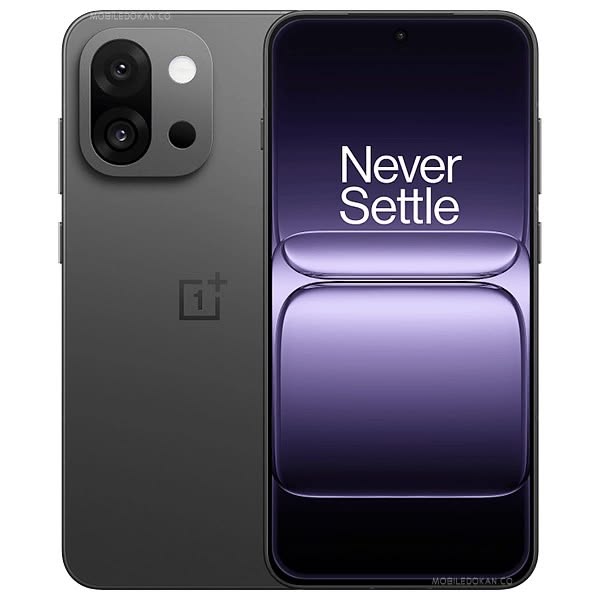
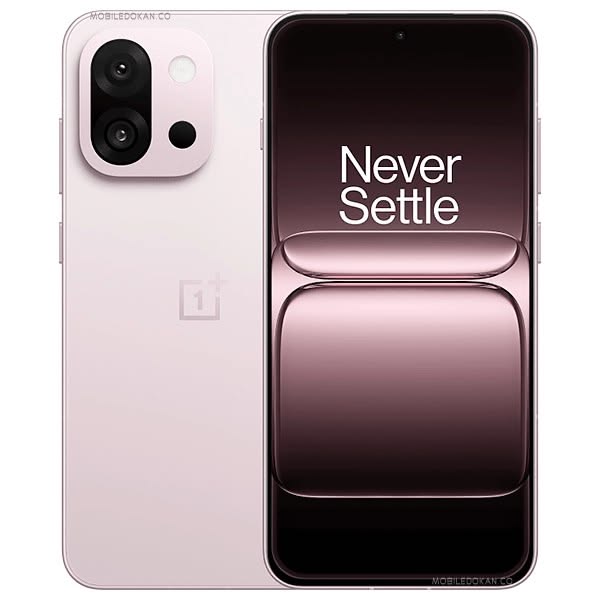

OnePlus 13s
KSh 70,000.00
A high-tier, highly compact performance flagship defined by its ultra-efficient 3nm Snapdragon 8 Elite platform and an industry-leading 5850mAh silicon-carbon battery compressed into a one-handed footprint. The OnePlus 13s pivots away from massive form factors, utilizing a beautifully pocketable 6.32-inch 1.5K flat LTPO AMOLED ProXDR display protected by rugged Crystal Shield Glass. It swaps the traditional alert slider for a customizable physical Plus Key to instantly trigger built-in AI tools like AI Plus Mind, AI Unblur, and AI VoiceScribe. Thermals are systematically managed by a specialized 4,400 $mm^2$ Cryo-Velocity Vapour Chamber configured via an S-structure sandwich motherboard. On the imaging front, it drops the ultra-wide lens to perfect a dual-sensor array led by a 50MP Sony LYT-700 main sensor alongside a 50MP telephoto camera with 2x optical zoom, all fueled by 80W SuperVOOC wired fast charging.
Add to cart
Buy Now
-
Size Guide
Size Guide
Variant / Model Storage / RAM Display Size Battery Capacity Standard Edition 128GB / 8GB RAM 6.1-inch OLED 3,200 mAh Pro Edition 256GB / 12GB RAM 6.7-inch AMOLED 4,500 mAh Ultra Edition 512GB / 16GB RAM 6.9-inch Dynamic AMOLED 5,000 mAh -
Delivery Return
Shipping & Delivery
We offer fast and reliable doorstep delivery within Nairobi and secure courier shipping to all 47 counties across Kenya. Every order is dispatched with a dedicated tracking number so you can monitor your package from our hub to your hands. Please note that during high-volume sale periods, product launches, or major promotions, delivery times may be slightly longer than normal.
Returns & Replacements
MobiPlace KE will accept returns or exchanges of genuine electronic devices and accessories within 7 days of the date of purchase (or within the specific manufacturer warranty window for technical defects). Items must be returned in their original, pristine condition, completely unopened with all factory seals intact, and accompanied by the original store receipt or digital invoice.
Once received at our center, your return will undergo technical inspection and is typically processed within 3 to 5 business days. We will immediately send you a Return Confirmation via email or SMS once the diagnostic review is completed and approved.
Refunds Processing
Upon approval of your return, please allow 1 to 3 business days for the financial reversal to reflect on your original payment method—whether processed via M-Pesa, Paystack, card channels, or direct bank transfer.
Need Assistance?
Have any questions regarding device specifications, order status, or setup configurations? Give our team a shout and we will be glad to assist you.
- Email: support@mobiplace.co.ke
- Phone/WhatsApp: +254 (0) 700 000 000
-
Ask a Question
Ask a Question
OnePlus 13s
KSh 70,000.00
Guaranteed Safe Checkout

Reliable Delivery
& Shipping On All Orders
100%
Guaranteed Satisfaction
Return Warranty
Give back if it has mistake.
The system architecture of the OnePlus 13s represents a masterclass in dense hardware packaging, giving users full flagship power without the typical size and weight penalties:
-
Next-Gen Compute & Structural Condensation: Driven by the raw power of Qualcomm’s Snapdragon 8 Elite (3nm) system-on-chip, the device incorporates desktop-level Oryon CPU cores alongside the Adreno 830 GPU. To fit this setup into an 8.2mm slim profile weighing just 185g, OnePlus engineered a sandwich mainboard structure that clears 30% more space, scaling down 355 internal components to accommodate a highly dense 5850mAh silicon-carbon cell.
-
Pocketable Ergonomics & Tactile Utility: Breaking the standard curved design language, the 13s sports an ergonomic flat 1.5K display with smooth 2.5D glass edges. It scales dynamically between 1Hz and 120Hz via LTPO mechanics, featuring Aqua Touch 2.0 for precise tracking through rain or wet fingers. The innovative hardware-mapped Plus Key serves as a context-aware utility hub, mapping custom hardware actions directly to local and cloud-based AI productivity workflows.
-
Dual-Lens Clarity & Custom Signal Handling: The camera layout bypasses low-utility ultra-wide lenses to maximize fidelity on its primary sensors: a 50MP Sony LYT-700 wide lens with multi-directional PDAF and hardware OIS, and a dedicated 50MP telephoto lens optimized for 2x native portraits. For connectivity, it integrates the world’s first independent Wi-Fi chipset designed to maintain 5.5G and Wi-Fi 7 network stability even deep within crowded infrastructure or behind dense concrete walls.
Technical Requirements & Material Specifications
The following table outlines the complete hardware layout, engineering tolerances, and technical performance thresholds of the compact OnePlus 13s 5G:
| Specification Category | Technical Requirement / Hardware Standard |
| Processor & Compute | Qualcomm Snapdragon 8 Elite (3nm advanced process node) |
| CPU Architecture | Octa-core Oryon V2 (2 $times$ 4.32 GHz Phoenix L Prime + 6 $times$ 3.53 GHz Phoenix M Gold) |
| GPU & AI Engine | Adreno 830 GPU (supporting PC-level 120 FPS gaming with HDR); Integrated Local/Cloud AI Engine |
| Memory Architecture | 12GB LPDDR5X high-speed RAM |
| Storage Infrastructure | 256GB / 512GB UFS 4.0 high-bandwidth flash storage (Non-expandable) |
| Display Technology | 6.32-inch Flat ProXDR LTPO AMOLED; 10-bit depth (1.07 Billion colors); Crystal Shield Glass |
| Display Resolution | 1.5K native resolution ($2640 times 1216$ pixels); 460 PPI density; 20:9 native aspect ratio |
| Refresh Profile | Smart dynamic variable scaling ranging from 1Hz up to 120Hz refresh rate |
| Luminescence Metrics | 1600 nits peak brightness under outdoor High Brightness Mode (HBM) |
| Primary Rear Camera | 50MP Sony LYT-700 Wide (f/1.8, 24mm equivalent, 1/1.56″ sensor, PDAF, OIS) |
| Telephoto Array | 50MP Dedicated Telephoto (f/2.0, 1/2.75″ sensor, 2x Native Optical Zoom, PDAF) |
| Front Capture Lens | 32MP High-Fidelity Selfie Camera (f/2.0, 21mm wide, Autofocus enabled) |
| Video Capabilities | Rear: 4K at 30/60fps, 1080p up to 240fps (Gyro-EIS & Dolby Vision HDR) | Front: 4K at 30fps |
| Wireless Stack | Wi-Fi 7 (802.11be ready via independent Wi-Fi chip), Bluetooth 6.0, 5.5G Network Support, NFC, IR Blaster |
| Thermal Mitigation | Compact Cryo-Velocity System: 4,400 $mm^2$ ultra-thin Vapour Chamber with 65% area efficiency |
| Telemetry Sensors | Under-display optical fingerprint reader, Custom physical “Plus Key”, Gyro, Proximity, Compass |
| Ingress Rating | IP65 Dust-tight and low-pressure water jet splash resistance certification |
| Power Infrastructure | 5850mAh Single-Cell Silicon-Carbon high-density battery matrix |
| Charging Protocol | 80W SUPERVOOC Wired Fast Charging (0-100% in ~29 mins); 5W Reverse Wired Charging |
| Chassis & Footprint | Dimensions: $150.8 times 71.7 times 8.2$ mm | Weight: 185g | Aluminum Alloy Mid-Frame |
Shipping & Delivery Details
- Please ensure your delivery location, estate/apartment details, or preferred upcountry courier branch is accurately specified at checkout.
- Orders within Nairobi are typically dispatched within 24 hours. Upcountry shipments are handed over to couriers within 1 business day after payment confirmation.
- Kindly inspect your device packaging upon delivery. If you notice any tampered seals or transit damage, alert the courier rider/clerk and contact us immediately so we can verify and facilitate a swift replacement.
| Shipping Method | Destination | Estimated Time | Tracking Information |
|---|---|---|---|
| Nairobi Express Rider | Within Nairobi & Environs | Same Day / Next Day | Real-time (WhatsApp/Call) |
| Secured Courier (Wells Fargo / G4S) | Major Upcountry Towns | 24 - 48 Hours | Waybill Provided |
| Regional Shuttle Parcels (e.g., 2NK, 4NTE, Molo Line) | Specific Regional Hubs | Same Day (Transit Dependent) | Receipt & Clerk Contact |




Reviews
There are no reviews yet.